
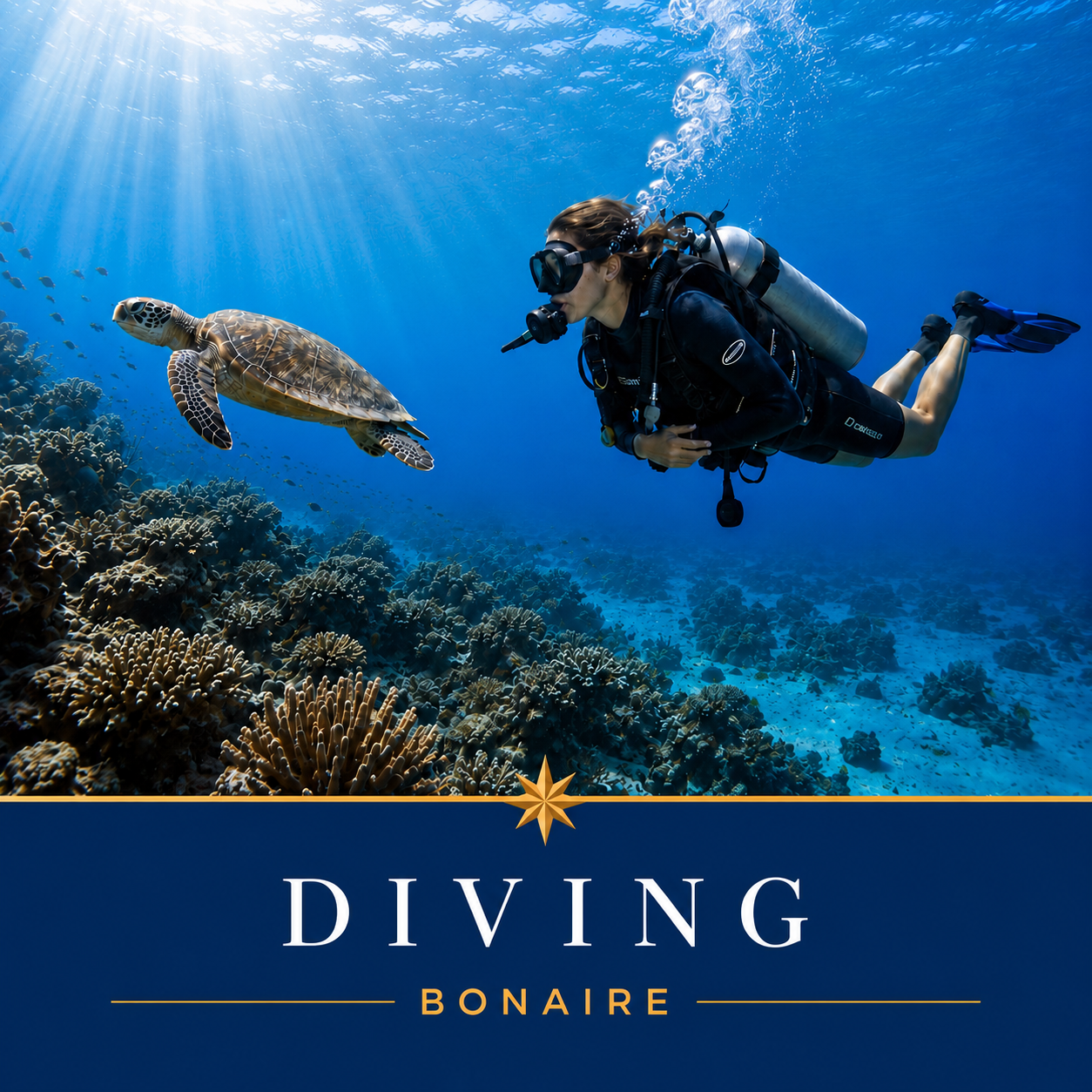
Bonaire is known for its spectacular Diving sides.
Bonaire is Call the divers Paradice!
From Hidden Reef to World-Famous Dive Destination.
Beneath the crystal-clear waters of Bonaire lies a story of exploration, conservation, and a deep connection between people and the sea. What began as a small island with untouched reefs has grown into one of the world’s most respected diving destinations.
The modern history of diving in Bonaire began in the early 1960s, when pioneers recognized the incredible value of the island’s coral reefs. One of the most influential figures was Captain Don Stewart, who arrived on Bonaire in 1962 and helped establish the island’s first dive operation. His passion for protecting the underwater world played an important role in the creation of what became the Bonaire National Marine Park, one of the Caribbean’s longest-running marine conservation areas.
During the 1970s, word began to spread among adventurous divers about Bonaire’s spectacular reefs, calm waters, and incredible marine life. Early explorers discovered new dive sites along the coastline, many of which remain favorites today. As diving infrastructure grew, Bonaire developed a unique reputation for easy access to healthy reefs, especially through shore diving.
In 1979, the waters surrounding Bonaire received official protection through the establishment of the Bonaire National Marine Park. This commitment to conservation helped preserve the island’s coral ecosystems and allowed generations of divers to experience the beauty of its underwater world.
Over the decades, Bonaire became known as the “Shore Diving Capital of the World”, offering divers the freedom to explore hundreds of marked dive sites directly from the coastline. The island’s reefs, clear visibility, and rich marine biodiversity continue to attract beginners, underwater photographers, and experienced divers from around the globe.
Today, diving in Bonaire is more than an activity — it is part of the island’s identity. Every dive tells a story of discovery, respect for nature, and the ongoing effort to protect a remarkable underwater heritage for future generations.